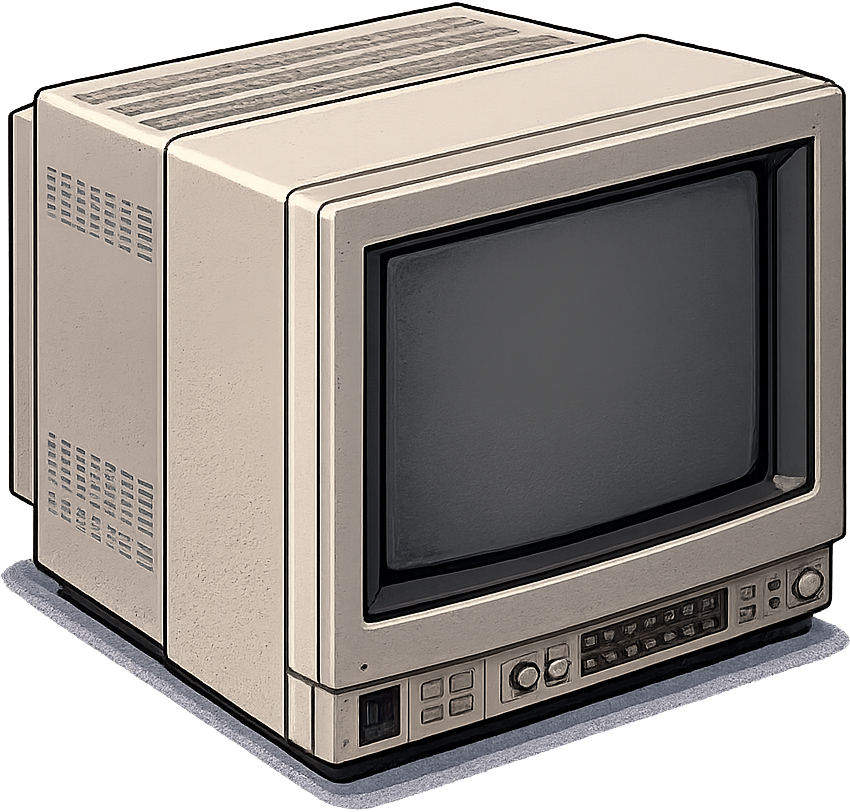
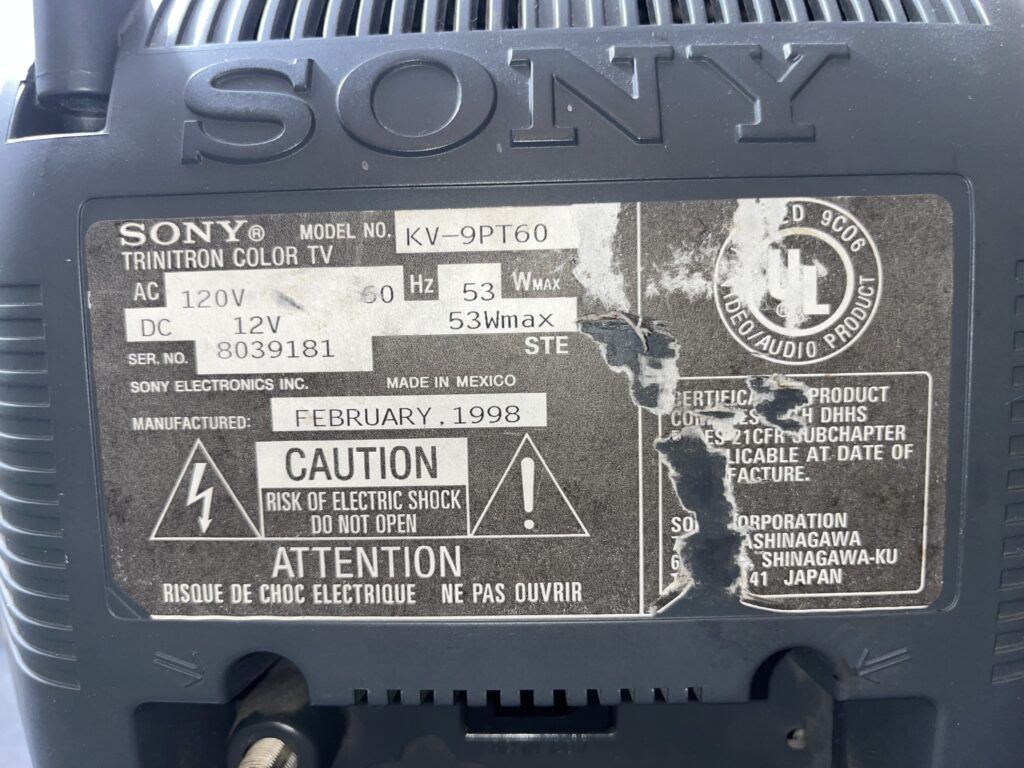
The CRT industry was being kinda weird. Big living room Trinitrons and D-Series sets were still everywhere and Sony was still putting real engineering effort into products most people would’ve considered a little kitchen TV.
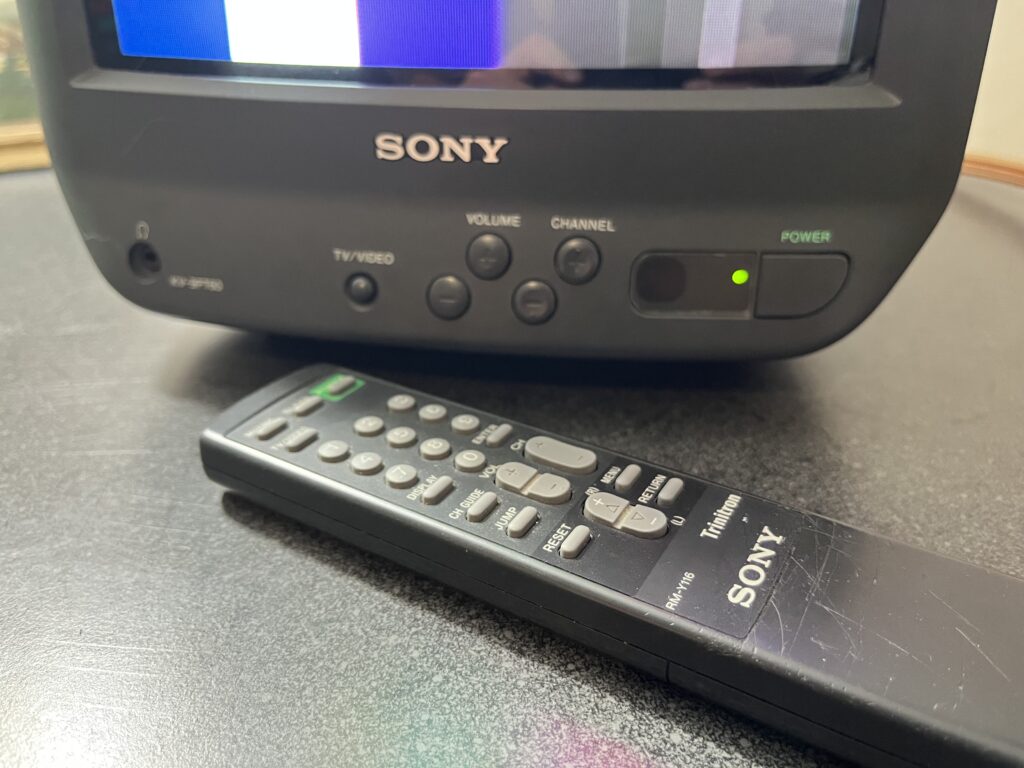
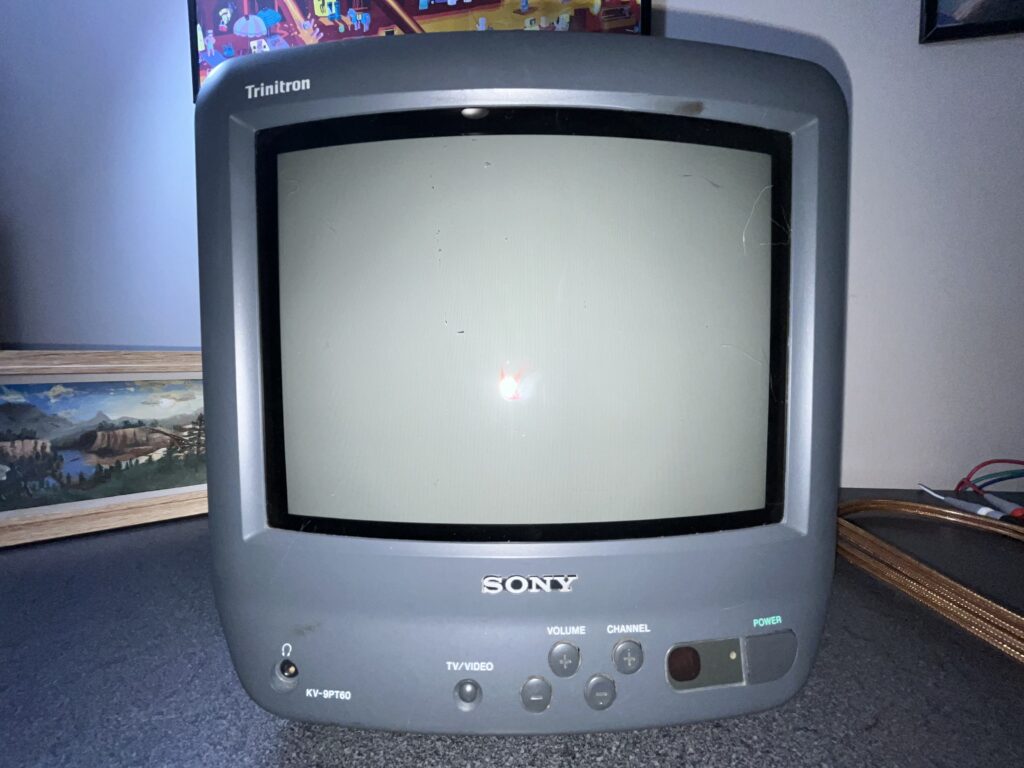
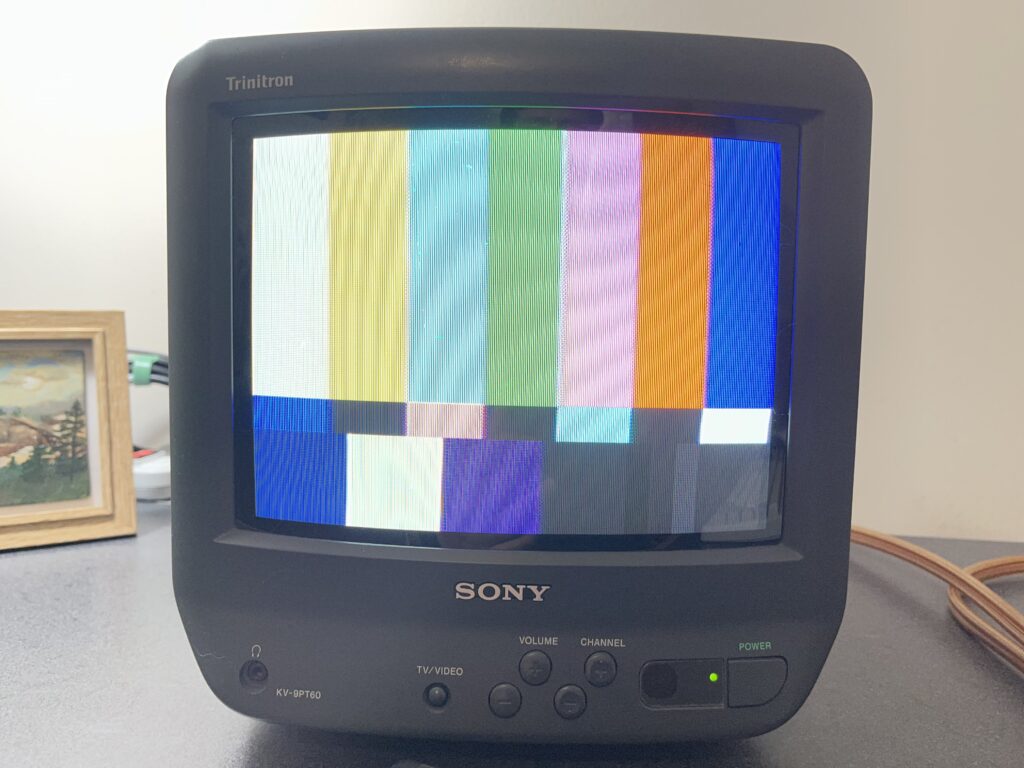
The KV-9PT60 is a 9 inch consumer Trinitron and she is absolutely amazing.
Most tiny consumer CRTs are…. Compromises. Just cheap junk. The kind of TVs people remember sitting on the counter in the kitchen or on the counter at a local business always looking slightly tired, covered in greasy dust and just…. Rough.
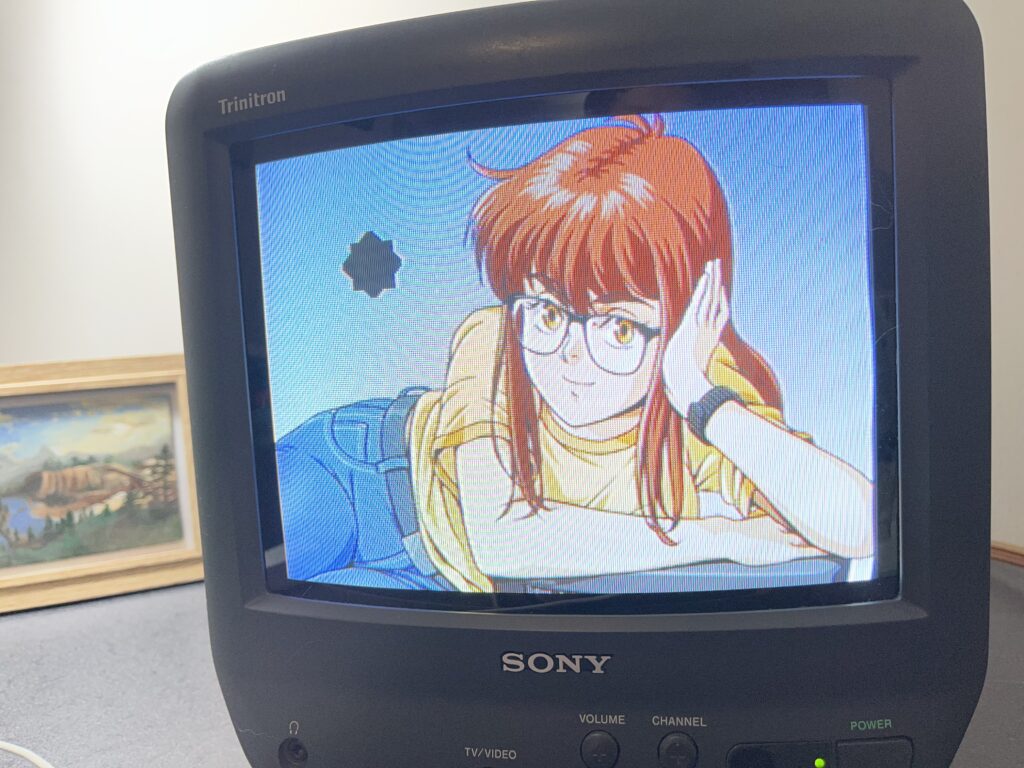
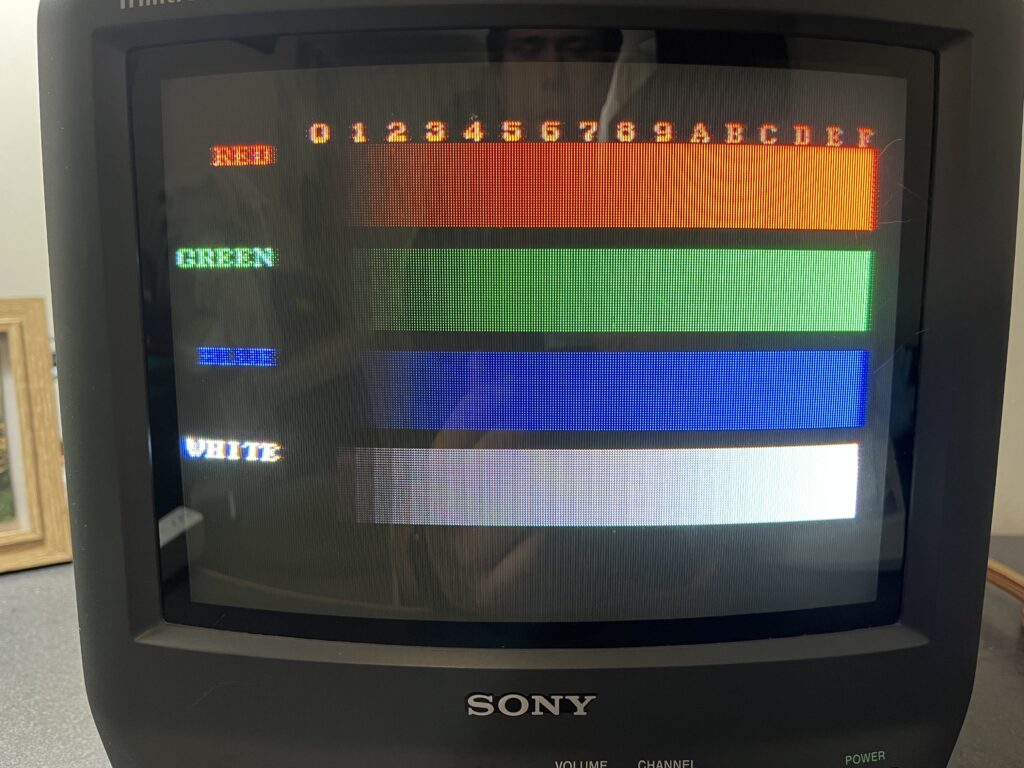
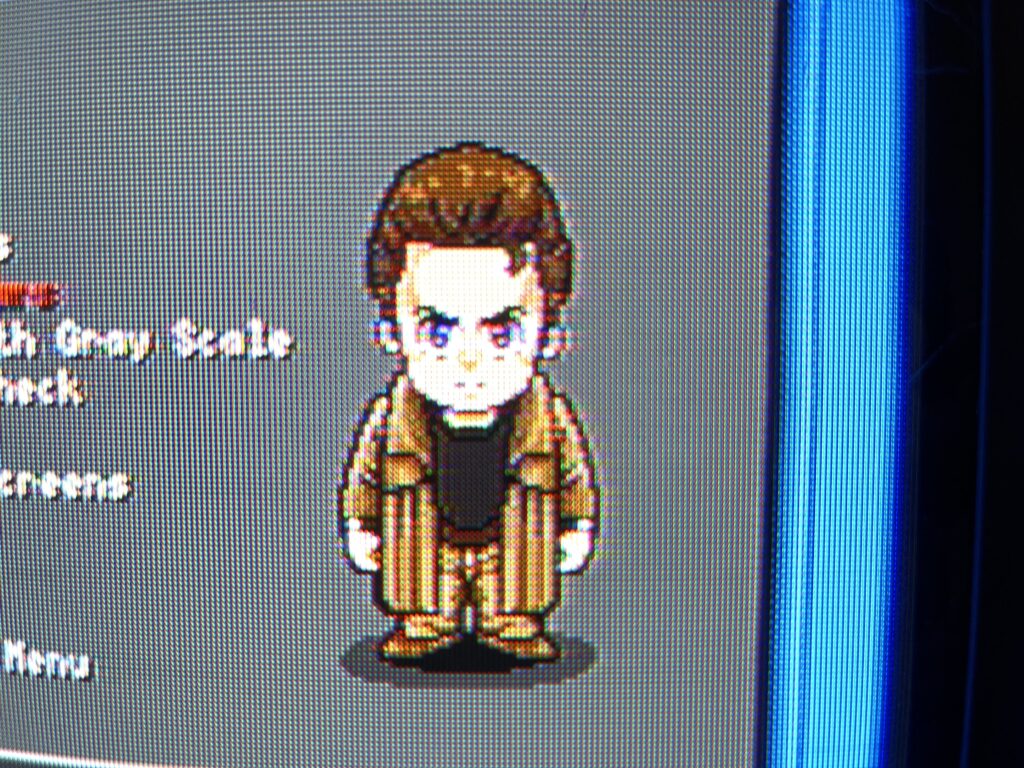
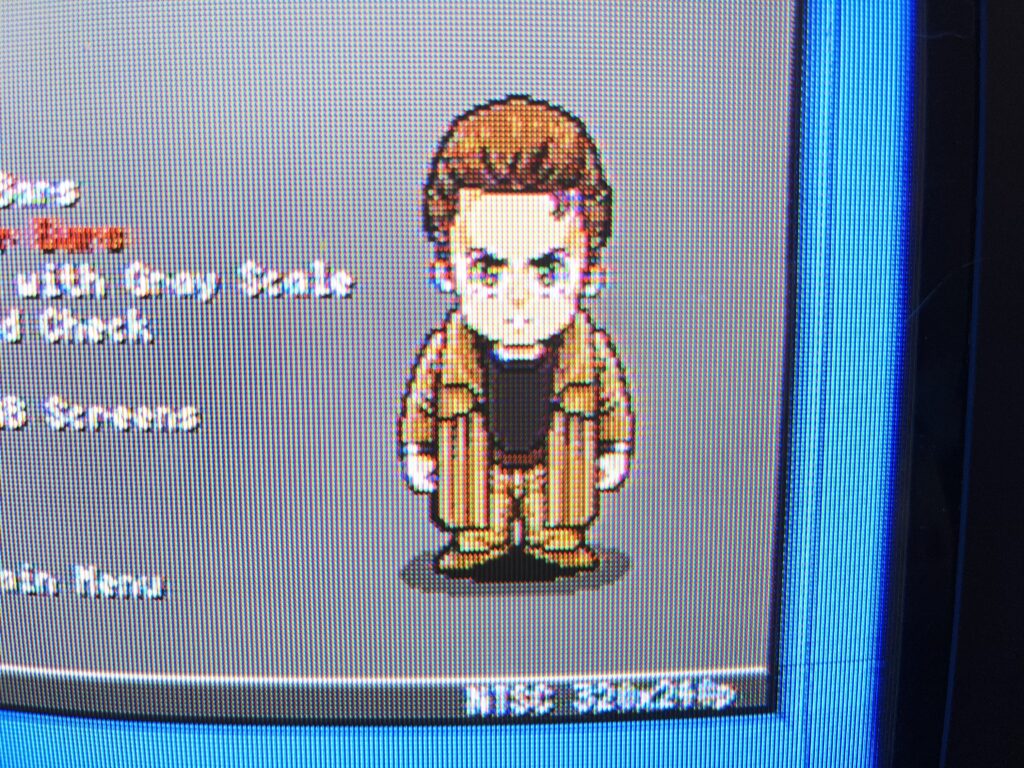
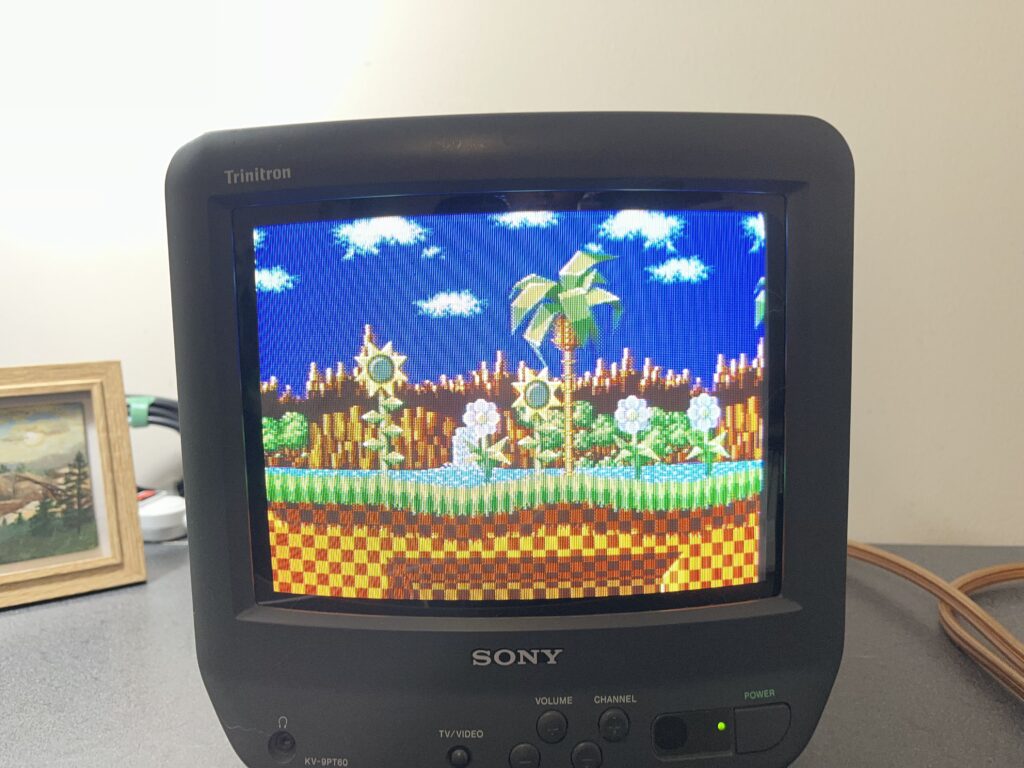
This girl is amazing! Tiny CRTs already have an advantage because the electron beam has less physical screen area to manage, but Sony’s Trinitron aperture grille tube pushes her into another category. The phosphor structure is incredibly tight. Colors are rich, and the image has this perfect sharpness that still retains proper analog blending. A lot of people confuse “sharp” with “good.” The reason this set works so well is because it still looks like a CRT. Composite artifacts exist, but instead of turning the image into mush, they become part of the aesthetic in the exact way late-90s gaming and video content were meant to look.
Honestly, this TV completely destroys the idea that composite automatically equals bad image quality. A bad CRT with composite looks bad because the tube itself is mediocre. A good CRT can overpower the limitations of the signal. The 9PT60 proves that immediately and what surprised me most is how well modern content scales down onto her. Usually when you feed newer content into a tiny consumer CRT, it starts feeling gimmicky. Everything turns into an unreadable much and the magic disappears but not with this little thing! The Trinitron tube carries the image hard enough that the set never collapses into mush. All content feels very welcomed like a miniature PVM in disguise.
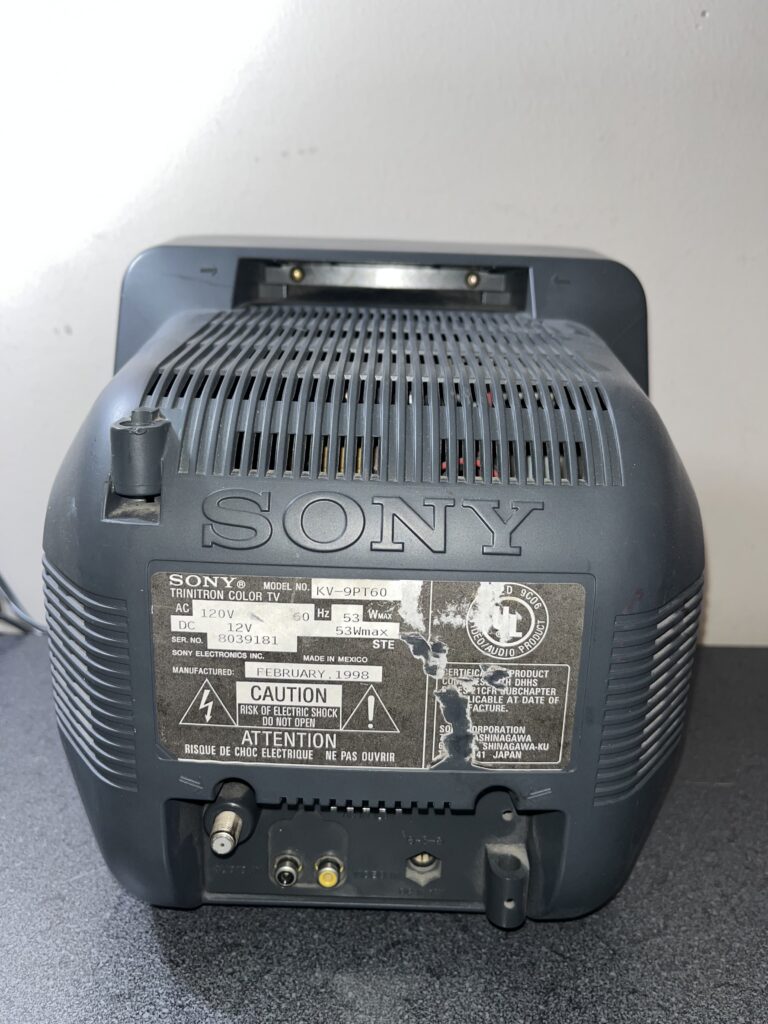
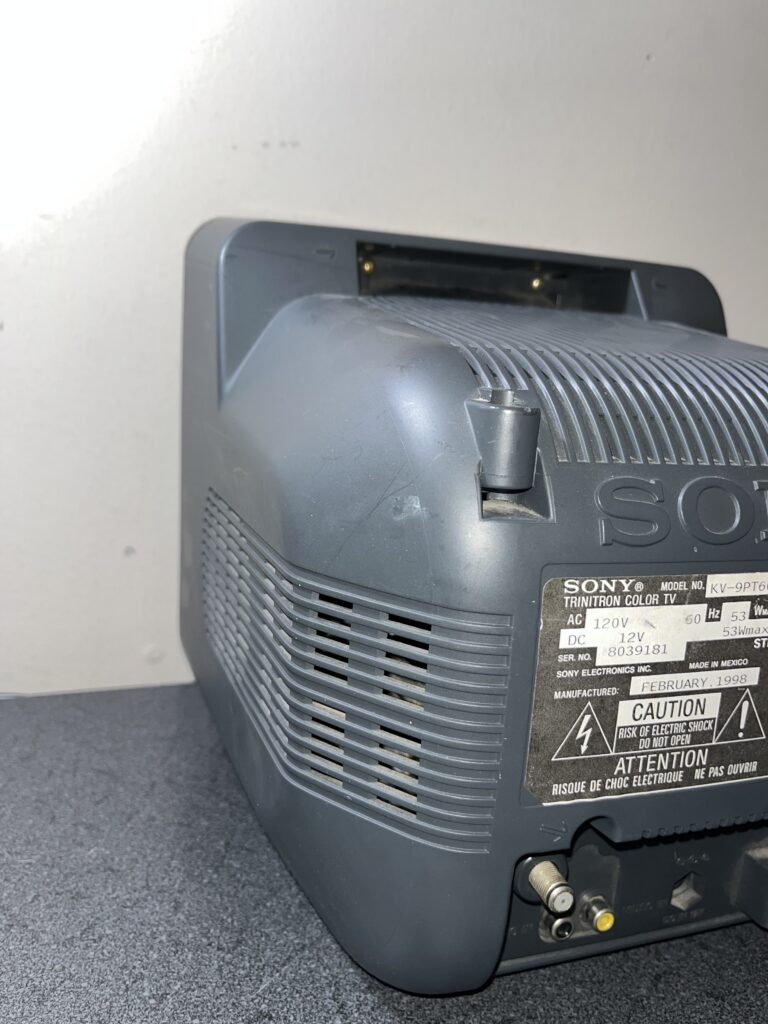
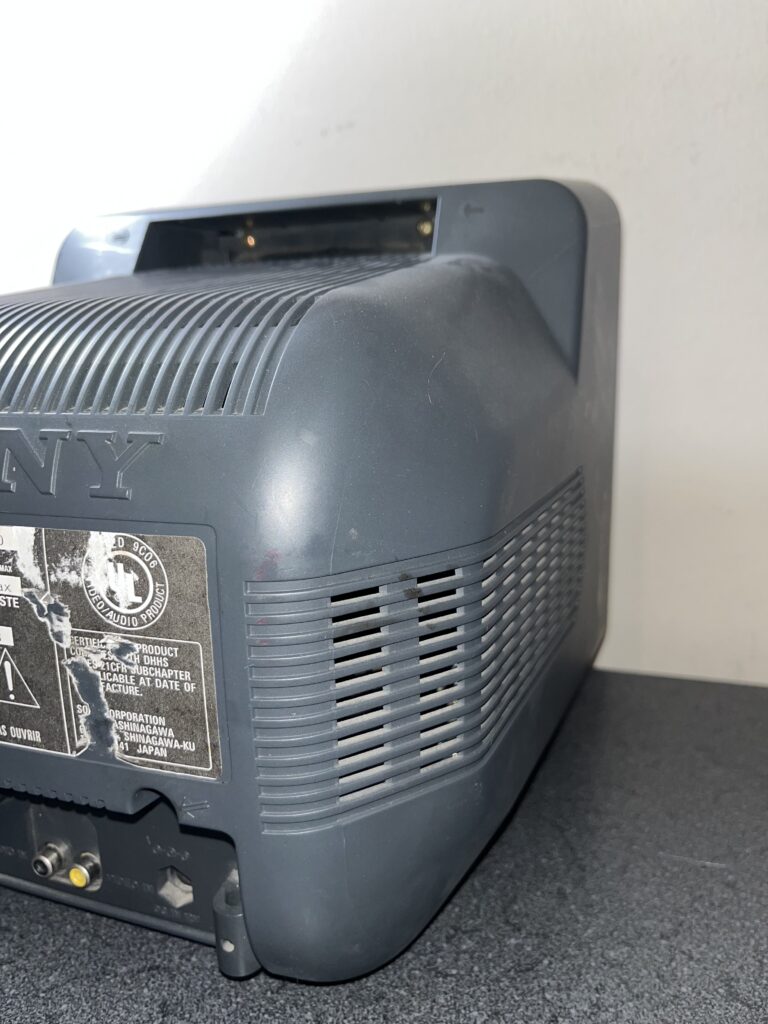
This was before Sony entered the silver-plastic early 2000s era where everything became this ugly cheap looking silver color. The dark charcoal shell on the KV-9PT60 still feels very serious like you purchased something PREMIUM. Mine is also in unusually good condition for one of these. The 9PT60s are notorious for brittle plastic and a huge number of surviving examples are cracked around the shell or mounting areas. Somehow mine is just…. Perfect. I need to be very careful with her because I know the disease is there…..
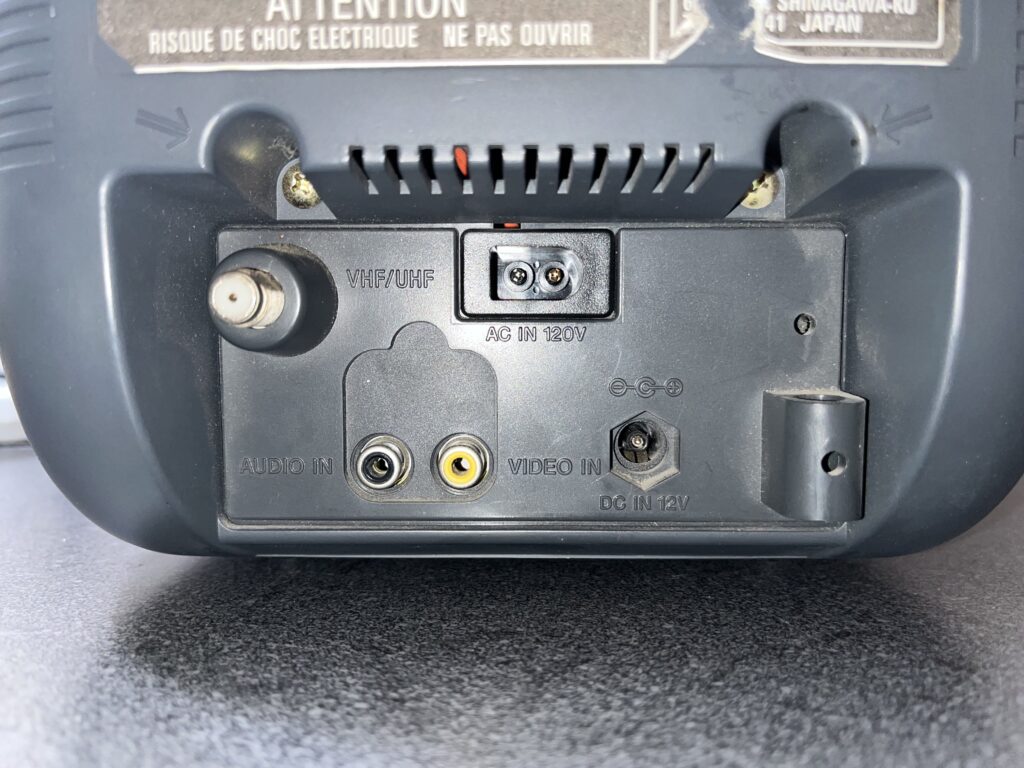
The DC 12V support is another thing I love about this TV. This wasn’t just a cheap backup television. It was designed for RVs, offices, boats, desktop setups, under-cabinet installations, and portable use. Sony even gave it a separate power supply PCB because of the AC/DC support.
This is also one of those rare consumer CRTs where I completely understand the cult following. Usually I can separate hype from reality pretty quickly, but the 9PT60 earns its reputation honestly. Once you actually sit in front of one, you understand why people go through the trouble of RGB modding them and preserving them.
The tube is simply that good. The KV-9PT60 feels like Sony accidentally built a tiny enthusiast CRT while trying to make a premium kitchen TV. 9.4
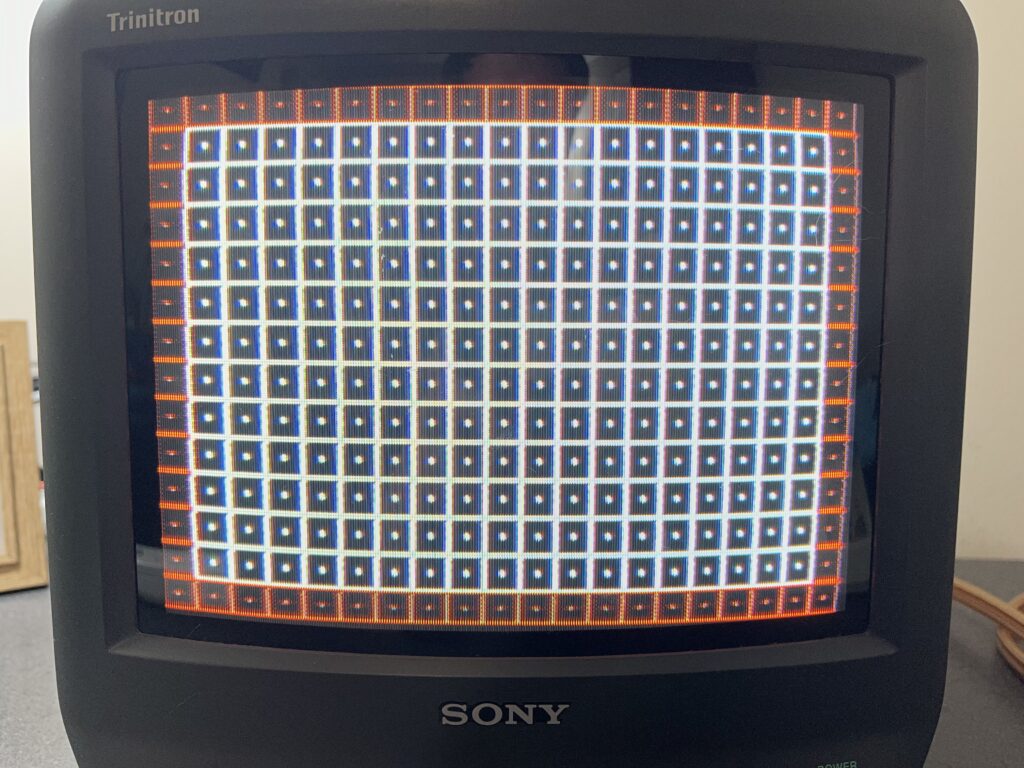
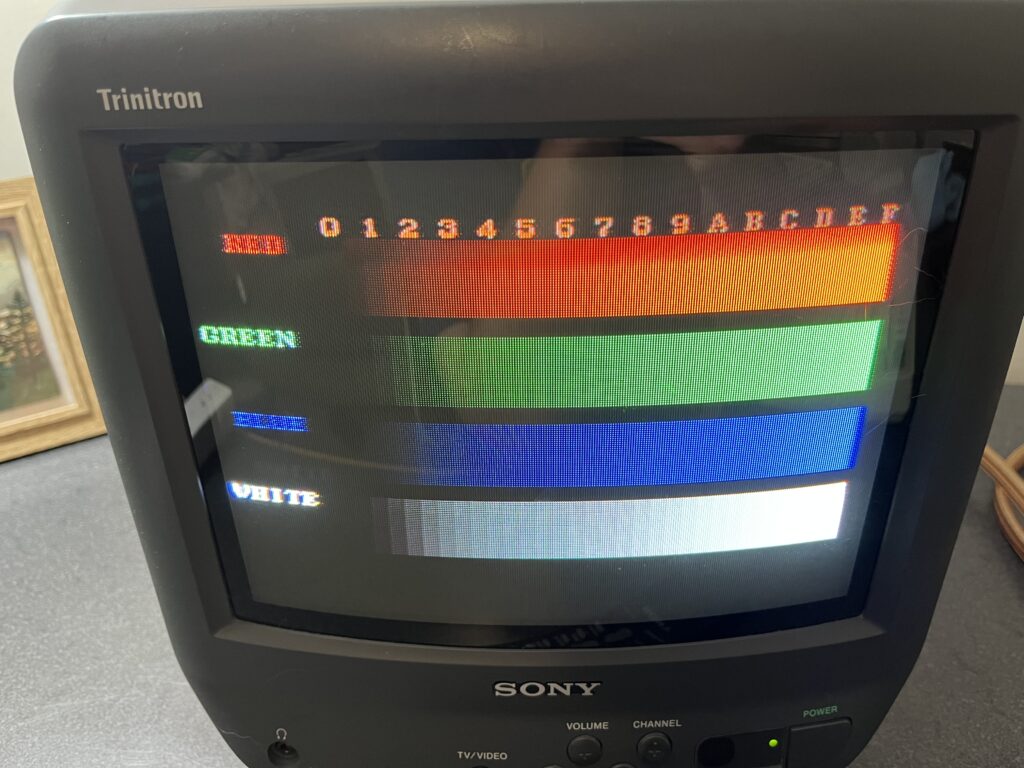
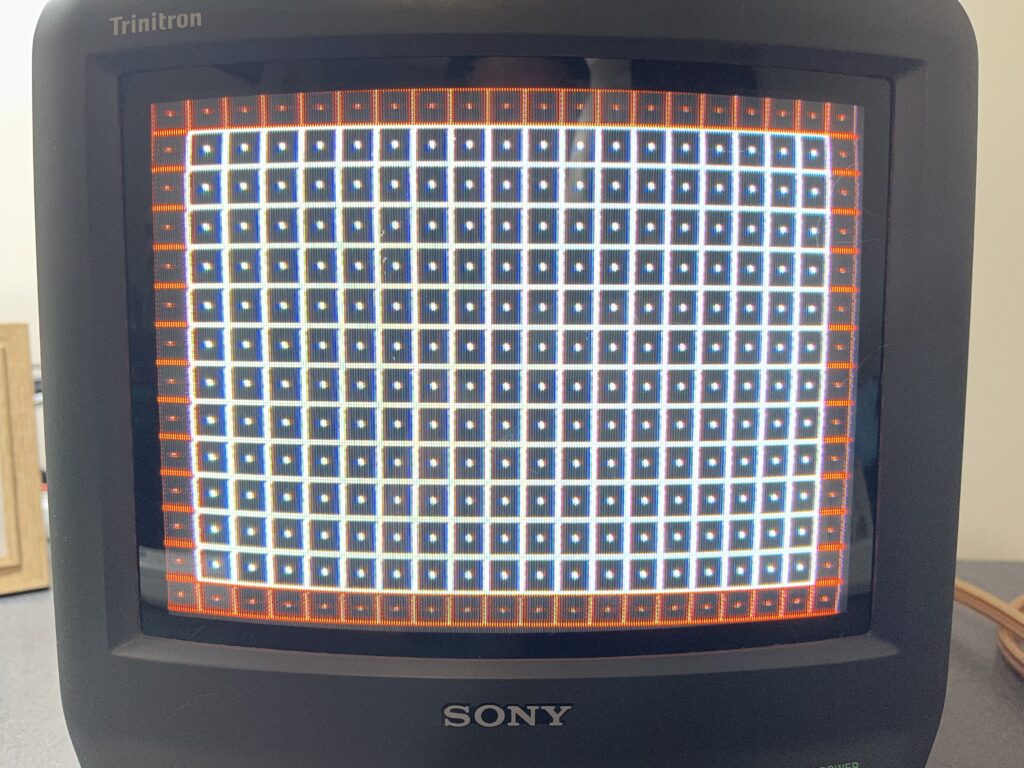
Only a few TECHNICAL flaws. Horizontal linearity is imperfect by design. The chassis omits a proper horizontal linearity correction coil as a cost-saving measure, which causes slight compression toward the right side of the image. If you pull up a grid pattern, you’ll see it immediately. Corner purity on these sets is never perfect, especially since there’s no H-STAT adjustment system, but my example performs exceptionally well. The tube still feels focused, balanced, and healthy. Whites are bright without bloom, blacks remain surprisingly deep, and color separation is excellent.
Brand:
Sony
Manufacturer:
Sony
Model:
9PT60
Series:
KV
Viewable Size:
9″
Input Signals:
Composite, RF
Native Resolutions:
240p, 480i, 576i, 288p
Horizontal Scan Range:
15 kHz
Vertical Scan Range:
60 Hz, 50 Hz
Aspect Ratio:
4:3
Formats:
NTSC
Mask:
Aperture Grill
Adjustments:
OSD Customer Controls, OSD Service Menu, Front Mounted Buttons
Removable Glare Film:
No
Sound:
Mono, Headphone Jack
Chassis:
BN-1
Weight:
12 lbs (5.4 kg)
Tube:
Sony Trinitron , A23LDU10X
Application:
Consumer TV
Cabinet Material:
Plastic
Launched:
1996
Country of Manufacture:
Mexico
Market:
North America
Mounting:
Desk Stand, Carrying Handle, Under-Cabinet Mount
Degaussing:
Auto-on power
CREDIT FOR THIS SPECIFICATIONS TABLE GOES DIRECTLY TO:
Internally, the 9PT60 is also very interesting. Most people lump the KV-9PT20, 40, 50, and 60 together because externally they look almost identical but they are not the same internally.

The 50 and 60 use Sony’s CXA1464AS jungle chip, which contains unused analog RGB and S-Video inputs. That single detail turned this tiny consumer TV into one of the most desirable RGB modding platforms in the small CRT world. The earlier 20 and 40 models use a different jungle chip that cannot be RGB modded at all.

The 50 and 60 also feature a real digital OSD service menu instead of analog potentiometers for adjustment. That means proper geometry and color tuning directly through software. On a tiny 9 inch consumer CRT in the late 90s, that’s surprisingly advanced. See the CRT DATABASE page about RGB modding this set!
Many technical specifications listed on this site are sourced from the CRT Database. Their work documenting CRT displays is extensive, accurate, and incredibly valuable to anyone interested in this hardware.
Whenever specifications are used from their database, proper credit is given.
If you want deeper technical details on any CRT mentioned here, you should absolutely reference their site.
Portions of this page include archived materials, images, and reference content originally published by Sony. These assets were sourced from publicly available historical snapshots via the Internet Archive and are used for informational, educational, and preservation purposes only.

All trademarks, logos, and original materials remain the property of their respective owners. This site is an independent archival project and is not affiliated with or endorsed by Sony. If you are a rights holder and would like any material removed or credited differently, please contact me and I will address it promptly.